Technotrade enables easy integration of self-service systems into any fuel station using the IoT PTS-2 controller

Fuel stations are changing fast. More retailers are switching to self-service to cut labor costs, offer 24/7 access and meet customer demand for contactless payments. Digital tools like loyalty apps and cloud reporting also push this shift. As self-service becomes the new standard, OPT manufacturers and pay-at-pump developers are primed to drive smarter, integrated solutions worldwide.
How Self-Service Works at Modern Gas Stations #
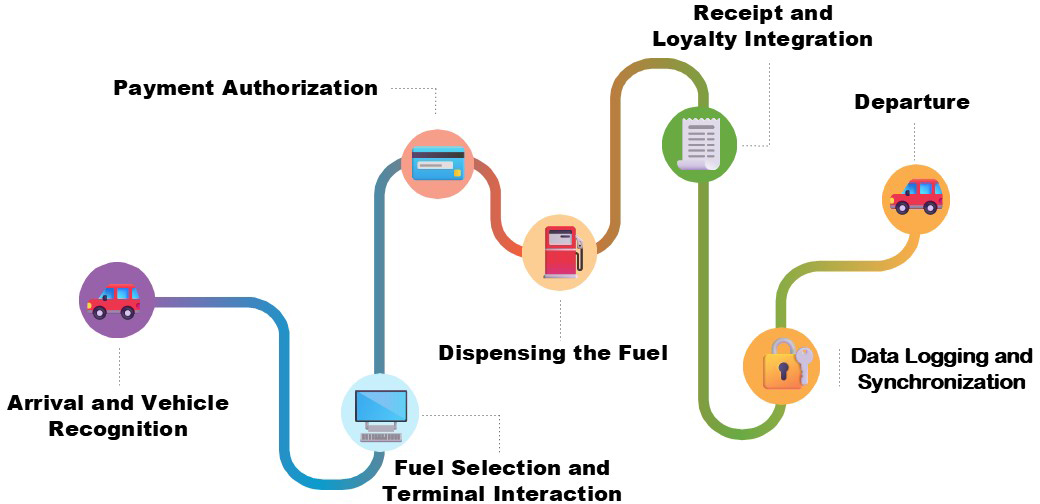
Let’s take a closer look at each step in the self-service refueling experience.
The process begins when the driver pulls up to a fuel dispenser and parks. At some advanced petrol stations, the system may automatically recognize the car using automatic vehicle identification (AVI) or RFID tags - especially useful for fleet accounts or loyalty programs.
Next, the customer interacts with a self-service interface. This could be an outdoor payment terminal mounted directly on the dispenser, a nearby touchscreen kiosk, or even a mobile app linked to the fuel station. The user selects the desired fuel grade - such as gasoline, diesel, or LPG - and confirms the pump number if needed.
Before fueling begins, the system prompts the customer to authorize payment. A wide range of options is typically supported, including:
- Bank cards (chip, magnetic stripe, or contactless)
- Mobile wallets like Apple Pay or Google Pay
- Fuel cards or loyalty cards
- QR code-based payments, which are especially popular in regions like Asia and Africa
Depending on the setup, the terminal may pre-authorize a fixed amount or allow the customer to set a fueling limit.
Once payment is approved, the fuel dispenser is activated. The customer lifts the nozzle, fills the tank, and returns the nozzle to its holder when finished. The system automatically records the exact volume and cost of the fuel dispensed.
After fueling, a receipt is issued - either printed on the spot or sent digitally via SMS, email, or mobile app. If a loyalty card or app was used, any applicable discounts or reward points are applied automatically.
The Technology That Makes Self-Service Work #
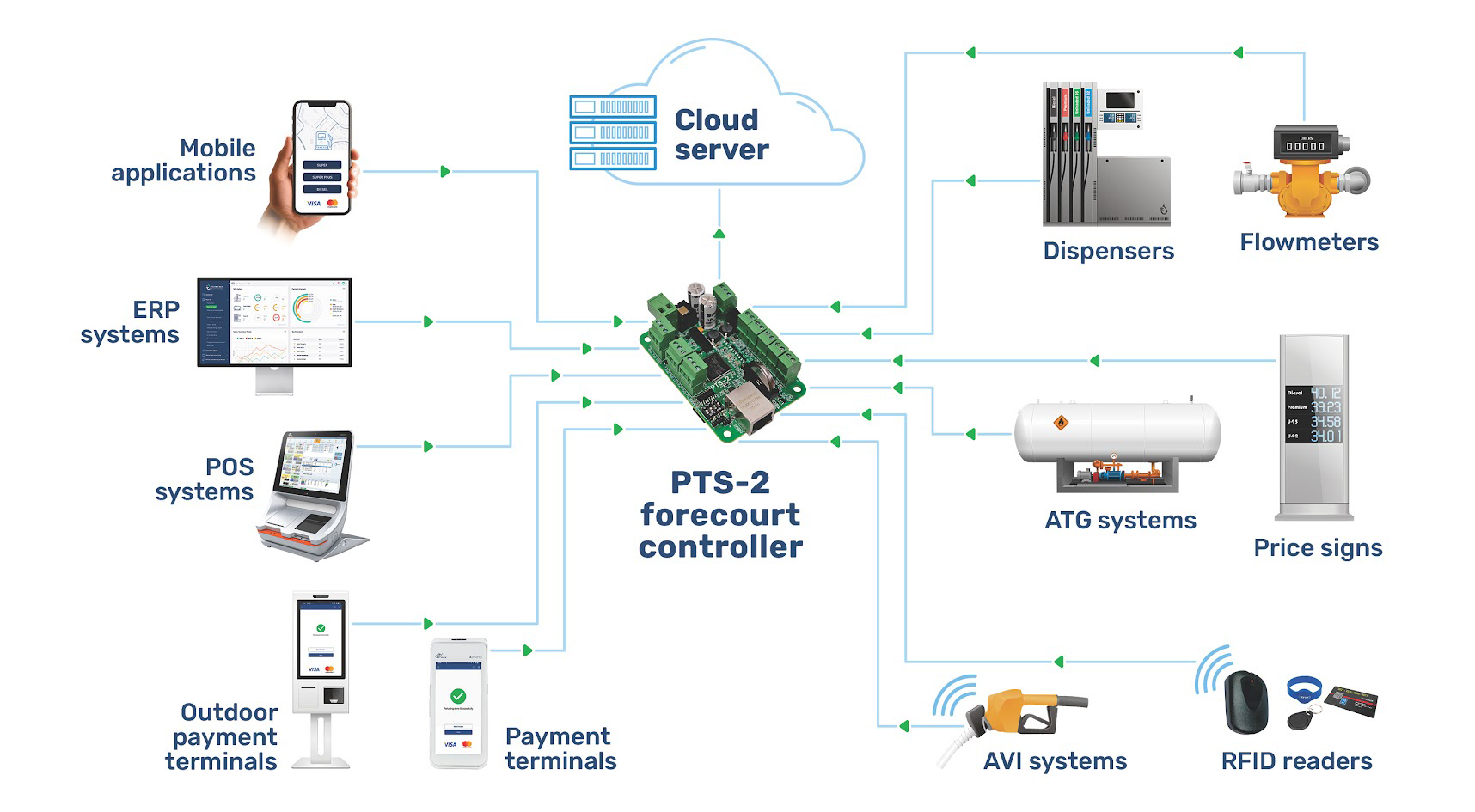
Behind the scenes, a fuel controller such as the PTS-2 coordinates communication between the payment terminal and the fuel dispensers. The PTS-2 forecourt controller stores the transaction locally and transmits to the central management system using secure protocols like WebSocket or HTTP. If the connection is temporarily unavailable, the PTS-2 forecourt controller safely stores the data and syncs it once the link is restored.
With the help of the PTS-2 forecourt controller, the central fuel management system efficiently handles pricing updates on the dispensers, price displays and self-service app, transaction reporting, loyalty program integration, and remote monitoring across the station.
Why Global Developers Choose the IoT PTS-2 forecourt controller for Self-Service Fueling #
Over the past four years, TECHNOTRADE has collaborated with self-service terminal manufacturers and software developers in New Zealand, Saudi Arabia, Iraq, Kenya, Tanzania, Ghana, Spain, the United States etc.
These companies built their pay-at-pump solutions around the IoT PTS-2 forecourt controller, choosing it based on the following key features:
- Easy-to-use API for both hardware and software integration, available in C#, C++, JavaScript and Android Java
- Unified JSON protocol that connects the management system with any fuel station equipment
- Compatible with various payment methods, including fuel cards and loyalty systems
- PTS-2 controller can act as a bridge between existing fuel management systems and forecourt equipment, simplifying the deployment of third-party solutions
- PTS-2 controller also works as a standalone unit, enabling autonomous operation without a central system
- Supports over 160 fuel dispenser brands, including legacy mechanical models
- Operates with four different dispenser protocols simultaneously
- Wireless communication with dispensers is also supported
- A single PTS-2 controller can manage up to 100 fueling points at one station
- WebSocket protocol enables real-time communication with remote servers
- Built-in memory stores a local transaction database, ensuring data integrity and automatic synchronization if the central system connection is lost
- Quick and straightforward installation, typically completed within 2 to 4 hours
The functionality of the PTS-2 controller addresses virtually all automation tasks at a fuel station. Smart stations start with a smart PTS-2 forecourt controller!